
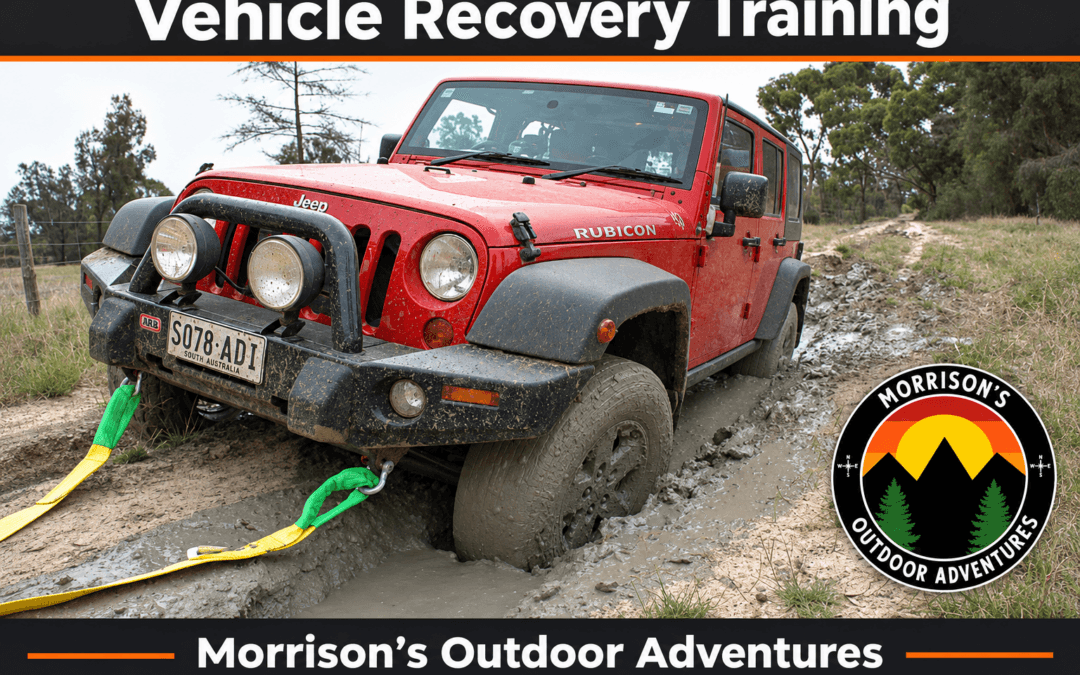
A trail ride can change quickly when a tire loses traction, a vehicle settles into soft ground, or an obstacle proves more difficult than expected. What began as a relaxing afternoon outdoors can become a problem that requires patience, sound judgment, and the right skills.
Vehicle recovery training helps you prepare for those moments before you face them on the trail. It gives you an opportunity to understand recovery equipment, practice under supervision, and learn how to evaluate a situation instead of rushing into an improvised solution.
At Morrison’s Outdoor Adventures, off-road education is part of building the confidence to explore responsibly. Whether you are planning your first trail ride or preparing for longer overland trips, recovery knowledge belongs alongside your driving skills.
What Is Vehicle Recovery Training?
Vehicle recovery training teaches drivers how to assess and manage situations involving a stuck or immobilized vehicle. Instruction can address equipment selection, recovery points, communication, hazard recognition, and the limitations of different techniques.
The most valuable lessons begin before anyone attaches a rope or operates a winch. You need to understand why the vehicle is stuck, what could happen if it moves, and whether the people and equipment available can handle the situation.
A course also provides space to ask practical questions. Is this piece of equipment suitable for your vehicle? What does its rating mean? When should you stop and seek outside assistance?
Those questions are easier to work through in a learning environment than during a stressful incident with a group waiting behind you.
Owning Recovery Gear Is Only the Beginning
A well-stocked recovery bag can create a reassuring feeling. However, having equipment available does not establish that it is suitable for a particular task or that everyone involved understands its use.
Think about the difference between buying a tool and learning a trade. The purchase gives you access to equipment; practice develops the judgment needed to use it appropriately.
Before adding another accessory to your vehicle, consider whether you can explain:
- What the equipment is designed to do.
- Which applications its manufacturer prohibits.
- How to inspect it and recognize damage.
- Whether its ratings and connections suit the intended recovery.
- How it should be maintained and stored.
Vehicle recovery training gives those questions a practical setting. It can also help you make more informed purchasing decisions by identifying gaps in your knowledge and setup before you spend money.
Learn to Assess the Situation Before Taking Action
Imagine a vehicle stopped in a muddy section of trail. One person suggests more throttle. Another wants to connect a rope. A third starts giving directions from the passenger side.
Without a shared assessment, the group may be responding to different assumptions.
A useful first step is to pause and establish what has happened. Is traction the main problem? Is the vehicle resting on an obstacle? Is there a mechanical issue? Does the surrounding ground create additional concerns?
You also need to consider people, changing weather, visibility, and available assistance. A recovery that exceeds the group’s capabilities calls for a different plan.
The purpose of training is to develop a repeatable decision process. You learn to explain your reasoning, recognize uncertainty, and avoid letting impatience decide the next move.
Understand Why Recovery Points and Equipment Matter
Vehicle recovery can place substantial forces on equipment and attachment points. A component that looks strong may serve a completely different purpose.
Australia’s ACCC Product Safety recovery strap guide warns that incorrect recovery strap use has caused serious injuries and deaths. It specifically cautions against unsuitable attachment points, including tow balls and tie-down eyes.
For drivers, the practical lesson is clear: never assume an attachment is suitable because it is convenient or resembles a recovery point. Confirm its intended use through the vehicle or component manufacturer.
Training helps you understand the questions to ask about connections, compatibility, and equipment condition. Follow the instructions for your actual products; a technique demonstrated with one system may not apply to another.
Build Familiarity With Winching Before an Emergency
A winch is a useful piece of equipment, but using one requires preparation and attention. The controls are only one part of the process.
The manufacturer’s WARN Basic Guide to Winching emphasizes planning, practice, equipment inspection, and understanding the specific product’s operating instructions. It also highlights hazards involving tensioned rope, moving components, and people standing too close.
Supervised practice lets you discuss those concerns before urgency enters the picture. You can learn to recognize when a setup needs to be reconsidered and ask why an instructor chooses a particular approach.
Treat manufacturer guidance as essential reading before class and before operating your equipment. Professional instruction provides an opportunity to connect that information with hands-on experience.
Improve Communication Throughout Your Group
Recovery is also a communication challenge. Even a group of experienced drivers can struggle when instructions conflict or nobody knows who is directing the operation.
Before any movement, participants should understand their assigned roles, agreed signals, and how to call a stop. Anyone who does not understand the plan needs the opportunity to say so.
Vehicle recovery training creates a setting where these conversations become part of the exercise. You can practice giving clear instructions, repeating critical information, and pausing when communication breaks down.
That experience is valuable for friends who regularly travel together, couples sharing driving duties, and club members who may assist different vehicles. Familiar equipment helps, but a shared plan is equally important.
Protect Your Vehicle and the Trails You Enjoy
A recovery decision affects more than the vehicle that is stuck. Repeated wheelspin, unnecessary ground disturbance, and poorly planned access can damage the surrounding area.
Tread Lightly!’s responsible overlanding guidance encourages staying on designated routes, avoiding unnecessary wheelspin, respecting closures, and preparing before a trip. Those principles remain relevant when an outing becomes difficult.
Responsible recovery planning should consider how to resolve the problem while limiting further disturbance. Creating a new route around a stuck vehicle is not an automatic solution, especially where travel outside the designated trail is prohibited.
Preparation also includes choosing terrain suited to your vehicle and experience. Learning recovery skills should strengthen your judgment about where to travel, including when to turn back.
What to Expect From Morrison’s Vehicle Recovery Training
Morrison’s Outdoor Adventures offers a full-day, beginner-friendly Vehicle Recovery Class through its off-road education and training pathways.
The course includes equipment selection and inspection, with hands-on practice involving:
- Winching.
- Hi-Lift Jack operations.
- Traction boards.
- Kinetic rope recoveries.
Morrison’s provides equipment for the exercises, and the course description states that a personal vehicle or recovery gear is not required. Participants should bring sturdy work gloves. Confirm the current event instructions before attending.
The introductory recovery class has no prerequisite. It also serves as the required foundation for Morrison’s Advanced Vehicle Recovery Class, giving students a path to continue learning after developing the basics.
Who Benefits From Vehicle Recovery Training?
New off-road drivers benefit from learning good habits early. A beginner course provides a place to ask questions that might otherwise go unanswered until a problem occurs.
Experienced drivers can benefit as well. Time on the trail does not necessarily include structured practice with every piece of equipment. A new vehicle, unfamiliar winch, or different travel group can introduce questions worth reviewing.
Training is particularly relevant for:
- Drivers preparing for remote travel.
- Overlanders planning longer trips.
- Owners who have purchased recovery equipment but rarely used it.
- Families who want a shared understanding of trail preparation.
- Club members interested in assisting others responsibly.
The strongest reason to attend is a willingness to improve. You do not need a dramatic recovery story to justify learning.
Frequently Asked Questions About Vehicle Recovery Training
Do I need experience before attending?
Morrison’s introductory Vehicle Recovery Class lists no prerequisite. If you are unsure which course suits your background, discuss your experience with the team before booking.
Should I purchase recovery gear first?
You can attend Morrison’s introductory class without personal recovery equipment. Learning before purchasing gives you an opportunity to ask which equipment suits your vehicle and intended travel.
Can I arrange private instruction?
Morrison’s offers private instruction and customized training for individuals and groups. Use its training inquiry form to explain your goals and ask about suitable options.
Does training mean I can handle every recovery?
No. Conditions, vehicle damage, available equipment, and experience all affect what is appropriate. Good judgment includes recognizing when to stop and request qualified assistance.
Prepare Before Your Next Trail Ride
Vehicle recovery training is an investment in preparation, practical judgment, and more confident decision-making. It helps you approach an unexpected problem with useful questions and practiced skills.
Morrison’s Outdoor Adventures combines off-road education with opportunities to develop your abilities through experience. Explore its available training pathways or contact Morrison’s Outdoor Adventures to discuss the next step for you.
Before your next adventure, make room in your plans for the knowledge that helps you use your equipment responsibly. The best time to begin learning is before you need it on the trail.